Australian junior miners rally as small caps fall, with key assays still pending
The gains span untested exploration targets and projects with feasibility studies, but several companies still need technical or financing milestones to support their plans.
Juniors mineras australianas avanzan pese al castigo bursátil, pero los sondajes aún deben responder
Why it matters: The share-price gains are running ahead of evidence at several projects, where pending assays and financing decisions could shape the next valuation step.
12.7% — decline in the S&P/ASX Emerging Companies Index in 2026.
278% — rise in Stelar Metals shares, the largest among the companies covered.
30,000 metres — LinQ Minerals’ planned drilling programme.
US$405 million — estimated development cost for Viridis Mining and Minerals’ Colossus project.
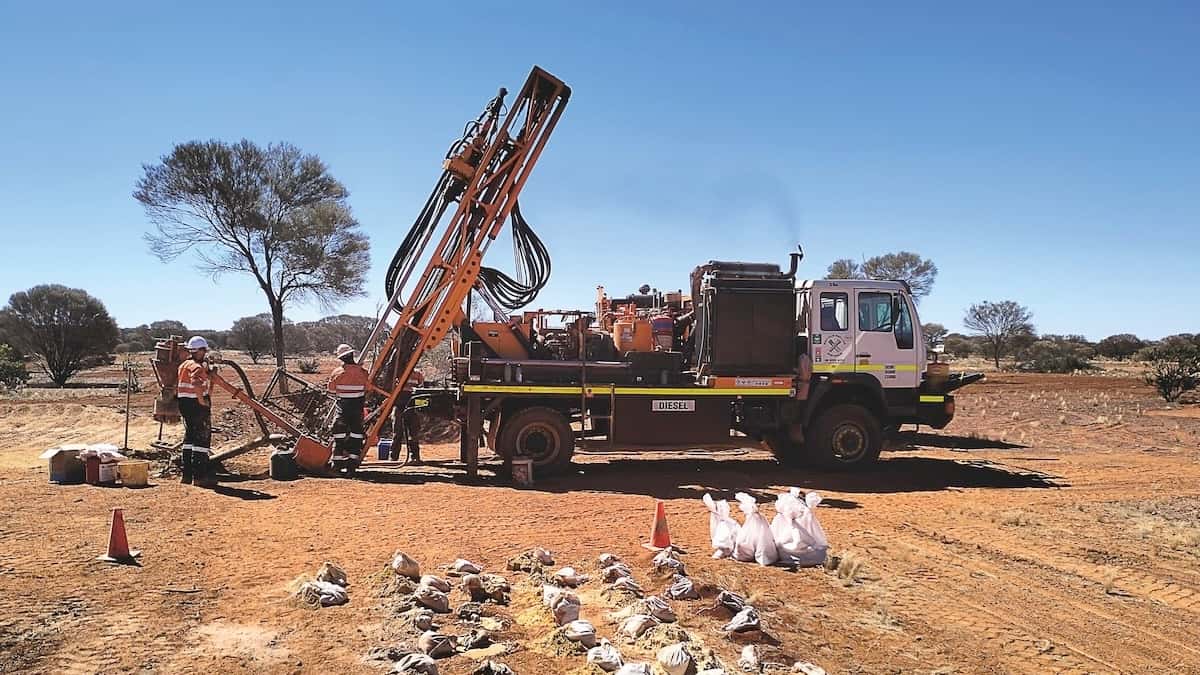
Australian junior miners recorded sharp share-price gains in 2026 despite a 12.7% fall in the S&P/ASX Emerging Companies Index. The advances range from explorers awaiting assays to companies with defined resources or feasibility studies, leaving investors to weigh drilling prospects against development and funding requirements. The XJR resources-junior index was still up about 8% for the year but had fallen nearly 7% over six months.
Pending assays underpin several exploration rallies
Stelar Metals rose 278% after acquiring the historical Hill of Leaders tungsten deposit near Tennant Creek in the Northern Territory. Drilling has traced mineralisation over about 1,300 metres of strike, while management considers the system could extend beyond 2,000 metres. Stelar’s initial 3,300-metre campaign was expected to deliver assays by the end of November; the observed extent does not establish grade or economically mineable volume. The tungsten price rose from less than US$300 per mtu to nearly US$3,000 per mtu between early 2025 and mid-2026, amid Chinese export controls. China accounts for about 80% of the market, according to the figures reported.
LinQ Minerals and BOA Resources each gained 226%. LinQ holds declared resources in New South Wales’ Lachlan Fold Belt of 3.7 million ounces of gold and 1.2 million tonnes of copper. At Gidginbung, deep drilling south of the former pit intersected high-sulphidation epithermal and porphyry-style mineralisation, with assays pending. At Monza, LinQ reported 70.8 metres at 1.11% copper equivalent, including 0.58 g/t gold and 0.65% copper. Its 30,000-metre programme was supported by $14.4 million in cash at September 30.
At BOA’s Neds Creek project in Western Australia, results included 32 metres at 1.91% copper from 27 metres depth at Limestone Bore and 23 metres at 2.65% copper from 173 metres at Ricci Lee, including six metres at 6.91%. The company raised A$9.25 million in October to fund further drilling and target a resource assessment at Ricci Lee. The intercepts are exploration results, not a mineral resource.
Resource growth and project economics remain distinct tests
Power Minerals gained 66% after acquiring the Morro do Ferro rare earths project in Brazil. Its exploration target is 9.2–10.7 million tonnes at 7.8%–9.2% total rare earth oxide (TREO), including an estimated 1.3%–1.6% magnetic rare earth oxide (MREO); drilling must validate the target. Reported intersections include 88 metres at 6.33% TREO and 1.19% MREO. A $5 million placement gave Critical Metals Corp, through its Australian subsidiary European Lithium, a 7.24% strategic stake. Power also holds the Santa Anna niobium and rare earths project.
Sierra Nevada Gold was up 118% after starting a 25,000-metre programme at the As Safra copper project in Saudi Arabia. The first phase completed 5,400 metres and returned shallow intersections above 1% copper. The company defined an 800-metre central zone within a 5.5-kilometre mineralised area, much of it undrilled. Assays from the larger programme were expected in November, with a first resource estimate dependent on results and continuity.
Other companies have advanced further but still face execution tests. Viridis Mining and Minerals, up 111%, published a definitive feasibility study for Colossus in Brazil, estimating US$405 million in development costs and annual production of 2,967 tonnes of magnetic rare earth oxides. It signed a binding offtake agreement with Solvay and raised US$120 million, but debt financing and a final investment decision remained outstanding. At Tennant Creek, CuFe reported resources at Orlando and Gecko totalling 23.5 million tonnes at 1.73% copper and 0.72 g/t gold, and began a 20,000-metre drilling programme. The next steps for the group therefore range from pending assays to resource definition and project financing.
More in Mining Stocks
Lincoln Gold upgrades to OTCQB as Nevada projects advance on separate tracks
A new U.S. venue raises a practical question for a company with Nevada projects at different stages.
RBC backs three copper stocks as production cuts challenge record prices
Copper's record price is not translating cleanly into output — and RBC sees a trio of ways to play the disconnect.