
PolarX extends Caribou Dome copper zone in Alaska as 11 drill assays remain
A cross-hole test sought to trace mineralisation beyond the known resource, while the company’s structural interpretation remains unproven.
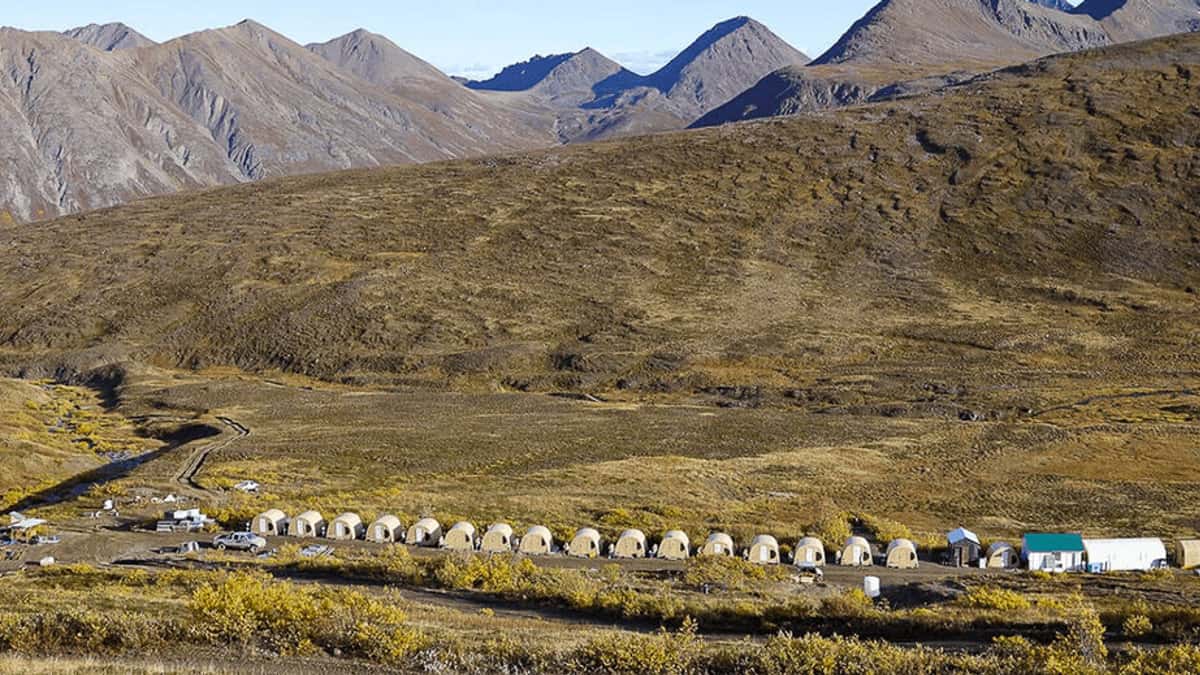
Why it matters: The western extension could add exploration ground beyond Caribou Dome’s existing resource, but continuity and scale remain to be established.
13.4 metres — 2.2% copper and 4.0 g/t silver from 217.6 metres down-hole
7.2 million tonnes — existing resource grading 3.1% copper and 6.5 g/t silver
6,687 metres — drilled in 22 holes during the 2026 campaign
11 holes — assay results still pending
PolarX reported a 13.4-metre interval grading 2.2% copper and 4.0 g/t silver at its Caribou Dome project in Alaska, extending the western mineralised zone about 60 metres towards the known resource boundary. The interval starts at 217.6 metres down-hole and comes from a hole drilled across an earlier hole to test the zone’s lateral continuity.
The result confirms visual observations in the core, the company said. PolarX interprets shallower intersections in the new hole as likely extensions of the same mineralisation, but that interpretation does not establish a new resource boundary or change the published estimate.
Cross-hole drilling tests the western zone
The new interval links with an earlier intersection of 58.5 metres grading 2.0% copper and 3.9 g/t silver from 138.7 metres down-hole. PolarX said the sequence approaches the resource boundary, which lies about 60 metres away.
Other reported intervals from the latest hole include 2.6 metres at 3.6% copper and 5.7 g/t silver from 222 metres, and 1 metre at 4.9% copper and 9.9 g/t silver from 230.1 metres. Higher in the hole, results included 10.3 metres at 1.1% copper and 1.9 g/t silver from 179.9 metres, and 7.1 metres at 1.3% copper and 1.8 g/t silver from 198.7 metres. A deeper interval returned 5.2 metres at 1.4% copper and 1.9 g/t silver from 351.2 metres down-hole. The company has not stated true widths for these intervals.
PolarX says the western zone reaches about 330 metres vertically below surface, the deepest mineralisation it has drilled on that flank. That vertical extent is distinct from the reported down-hole depths of individual intercepts.
Caribou Dome has a resource of 7.2 million tonnes grading 3.1% copper and 6.5 g/t silver across the Measured, Indicated and Inferred categories. The new results are outside the western edge targeted by the campaign and do not, by themselves, revise that estimate.
Sulphide textures inform the next targets
In two holes drilled into the western extension, PolarX observed copper sulphides replacing rock fragments in fractured zones. The company interprets the textures as potentially indicating proximity to a channel that carried mineralising fluids. This is a geological interpretation, not confirmation of the channel’s position or continuity.
The campaign finished in September after 6,687 metres of drilling across 22 holes. PolarX holds a 70% interest in Caribou Dome through the Alaska Range joint venture with Northern Star Resources, which fully funded the 2026 drilling. Assays from 11 holes remain outstanding. PolarX said it will combine those results with its structural interpretation to select targets for drilling in 2027.
More in Discoveries

Parbo intersects greenstone beneath Mount Padbury granite, forcing a gravity-model reset
GoldenEye has supplied a geological reference, while assays from pyrite-bearing Goldfinger breccias remain outstanding.
Sierra Nevada Gold hits shallow gold at As Safra, with continuity still unproven
Historic workings and high-grade rock samples mark a 400-by-100-metre corridor that had never been drilled.
Earth AI maps nearly 3 km of copper-gold at Fontenoy, but continuity remains untested
Most historical drilling reached only the first 100 metres, leaving deeper geometry central to the 2027 resource plan.